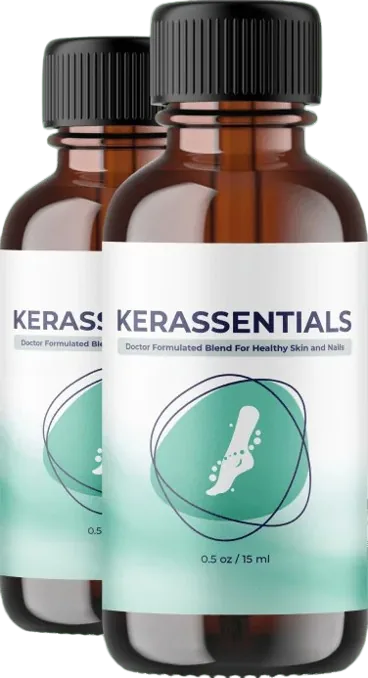
Kerassentials — Worth Trying in 2026?
Kerassentials is a topical oil formula for adults who have spent months — sometimes years — dealing with persistent nail discoloration, skin irritation, and the kind of stubborn fungal odor that no over-the-counter cream seems to fully address. Consistent daily application may support clearer, healthier-looking nails and calmer surrounding skin over time.
You've Tried Everything — Yet the Itching, Discoloration, and Smell Keep Coming Back
Objectively, dealing with persistent nail or skin fungal issues feels deeply personal — like your own body is betraying you in the most embarrassing way possible. Sandals stay in the closet. Socks stay on at the pool. The quiet shame of a problem that should have resolved months ago quietly chips away at confidence.
- ✕Your nails are thick, discolored, or brittle — and no over-the-counter treatment has made a lasting difference.
- ✕Wearing open-toed shoes or going barefoot around others has become something you actively avoid.
- ✕You've finished a full course of antifungal treatment only to watch the infection gradually return a few months later.
- ✕The smell — even after washing carefully — still lingers, making you self-conscious in social situations.
- ✕Money spent on creams, sprays, and pills adds up fast when nothing seems to fully resolve the underlying issue.
- ✕Surrounding skin stays irritated, flaky, or itchy even after the nail appears to improve slightly.
Standard antifungal treatments are often stopped too early — the infection looks better before it's actually gone, which means the fungus survives and can come back stronger. Most topical drugstore products also don't address the skin surrounding the nail, which leaves a reservoir for reinfection that nobody talks about.
What Kerassentials Is — and What the Ingredients Are Based On
Measured against the evidence, lavender oil, one of Kerassentials's core components, has been examined in peer-reviewed research for its activity against dermatophytes — the fungal organisms most commonly responsible for nail infections. Flaxseed oil brings a different mechanism: its omega-3 fatty acid content has been studied for supporting the skin barrier, which can reduce moisture pathways that fungi exploit. Together, these aren't random botanical choices — they map to specific biological targets relevant to superficial fungal infections.
At a practical level, kerassentials arrives as a topical oil applied with a brush applicator rather than as a capsule or cream — a form factor that allows direct contact with the nail plate and surrounding skin. Manufactured under GMP-certified conditions, the formula is positioned against prescription-grade treatments for buyers who want a sustained, daily-use option without systemic drug exposure.
At the compound level, skeptical buyers often ask whether a topical oil can penetrate the nail plate deeply enough to matter. Research on oil-based antifungal carriers does suggest improved permeation compared to water-based creams — though individual nail thickness and infection depth will influence how consistently that holds across users.
Unlike single-compound antifungal creams, the Kerassentials formula pairs keratin-protective botanicals with skin-barrier oils — addressing both the nail structure and the surrounding tissue in one application.
How Kerassentials Approaches Nail and Skin Fungal Issues
Addressing Fungal Resistance at the Surface
Objectively, repeated use of a single antifungal agent can allow resistant fungal strains to develop — this is documented in CDC guidance and is a real reason why standard treatments stop working. Lavender oil introduces a different class of antifungal activity, and research suggests its linalool content disrupts fungal membrane integrity through a pathway distinct from most pharmaceutical options.
Protecting Nail Keratin During Recovery
To be clear, fungal infection degrades keratin — the structural protein that makes up the nail plate. Several botanicals in this formula, including lavender oil, have been studied specifically for keratin-protective properties, which may help support nail integrity while the infection is being addressed rather than simply masking surface appearance.
Reinforcing the Skin Barrier Around the Nail
Comparing to category averages, organic flaxseed oil contributes alpha-linolenic acid, which skin research has examined for its role in maintaining epidermal barrier function. Broken or compromised skin around the nail bed is a primary reinfection pathway — addressing it topically alongside the nail itself is an approach most single-ingredient antifungal products skip entirely.
What People Report After Using Kerassentials
Representative experiences — results vary per person
“Clotrimazole cream worked for about six weeks before my nail started looking the same as before — the infection hadn't actually cleared, it just quieted down. By week two with Kerassentials, the itching around my nail bed had noticeably reduced, which hadn't happened with anything else I'd tried. The discoloration took longer, but watching the new growth come in clearer was genuinely different from anything previous treatments produced. Consistency made the difference — I applied it twice daily without skipping.”

“Construction work means boots on for ten hours a day — the moisture and pressure make nail fungus almost unavoidable in my trade. At week seven, my nail texture had improved enough that I wasn't catching it on my socks anymore, and the smell I'd been managing with foot powder for years was mostly gone. Not an overnight fix, but a real one.”

“A beach vacation booked for the following summer forced me to actually commit to addressing this rather than just hoping it would resolve. At ten weeks, the affected nail had grown out noticeably clearer at the base — enough that sandals weren't off the table anymore. The surrounding skin, which had been rough and flaky for a long time, felt softer than it had in years. Following the application routine consistently made a bigger difference than any product I had used before.”

Built to a Higher Standard
 GMP ApprovedGMP-compliant production standards
 FDA-Listed FacilityFDA-registered manufacturing facility
 Made in USAUS-manufactured formula
 No SyntheticsNo synthetic binders or chemical additives
Choose Your Kerassentials Package
Select your preferred supply option below
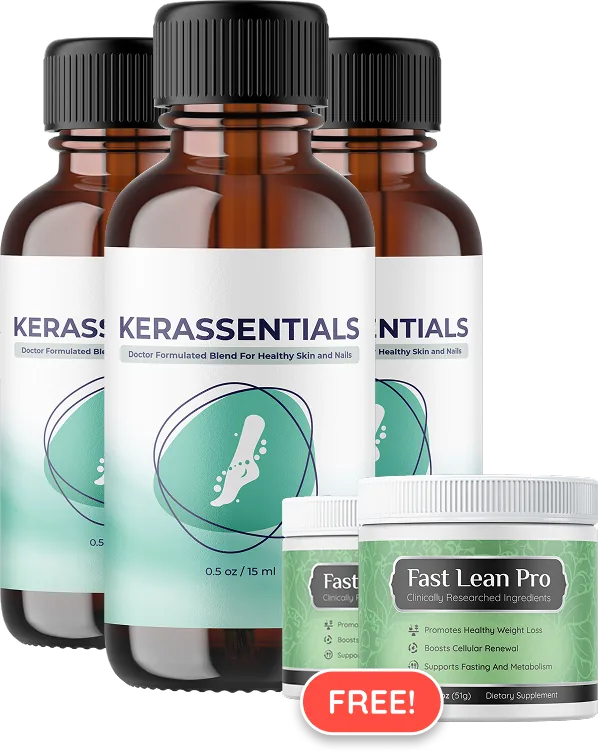

Manufacturer Direct: Direct from manufacturer only — not available through Amazon, Walmart, or third-party retailers.
What Kerassentials May Support With Consistent Use
Reduced Visible Nail Discoloration Over Time
From a mechanism perspective, users report gradual improvement in nail color and clarity, typically beginning after consistent application through the first regrowth cycle. Lavender and tea tree oils address the underlying fungal activity rather than bleaching or coating the surface, so change reflects actual nail health rather than cosmetic masking.
Less Itching and Irritation Around the Nail Bed
Objectively, aloe vera and vitamin E work on the periungual skin — the tissue immediately surrounding the nail — which is where much of the itching and inflammation originates. Most antifungal products focus on the nail plate itself and ignore this tissue entirely. Addressing it may reduce the irritation cycle that makes fungal conditions feel so persistent.
Odor Reduction as Fungal Load Decreases
Measured against the evidence, fungal metabolic byproducts are responsible for the characteristic smell associated with nail infections. As undecylenic acid and the formula's antifungal botanicals work to reduce fungal activity, most users report odor diminishing noticeably within the first few weeks of consistent use.
Improved Nail Texture and Reduced Brittleness
At the compound level, tocopheryl acetate has been studied for its role in nail hydration, and organic flaxseed oil contributes fatty acids that support the surrounding skin barrier. Together, these may support softer, less brittle nail texture as regrowth progresses — an improvement that goes beyond antifungal activity alone.
Broader Antifungal Spectrum Than Single-Ingredient Products
Comparing to category averages, combining lavender, tea tree, manuka, and undecylenic acid addresses both dermatophytes and Candida species through mechanistically different pathways. Single-ingredient topicals carry a higher risk of the resistance issue the CDC has flagged — multi-compound approaches reduce that risk by not relying on one mode of action.
No Systemic Drug Exposure
On a per-ingredient basis, oral antifungal medications require liver monitoring and carry real drug interaction risks. Kerassentials ingredients are applied topically, which means the systemic absorption profile is substantially lower — a meaningful consideration for adults who are already managing medications or who have had concerns about prescription antifungal side effects.
Kerassentials Ingredients
7 active ingredients — targeting fungal activity, nail keratin integrity, skin barrier resilience, and microbial balance
On a per-ingredient basis, fungal nail formulas include lavender oil because it targets dermatophyte activity through a mechanism that differs from standard azole antifungals — a distinction that matters when dealing with treatment-resistant strains. Its primary active constituents, linalool and linalyl acetate, have been studied in vitro for their ability to disrupt fungal cell membranes. Research published in peer-reviewed mycology journals has found lavender oil effective against Trichophyton species — the fungi most commonly implicated in nail infections. It also appears in keratin-protection research, making it relevant both offensively and defensively within this formula.
At a practical level, cold-pressed flaxseed oil retains its alpha-linolenic acid content more reliably than heat-extracted versions — a processing distinction that affects whether the skin barrier benefits actually transfer. Research into omega-3 fatty acids and epidermal barrier function shows that topical application of ALA-rich oils may support ceramide production and reduce transepidermal water loss. For a formula aimed at skin surrounding infected nails, this matters because compromised barrier tissue is the most common reinfection entry point. Studies on flaxseed oil have also noted mild anti-inflammatory activity in skin tissue, which may contribute to reduced irritation during recovery.
Objectively, australian Aboriginal communities used Melaleuca alternifolia for skin and wound management long before Western herbalism catalogued it — modern research has since validated a specific mechanism behind that use. Tea tree oil's terpinen-4-ol content has been studied extensively for antimicrobial and antifungal activity, including a controlled trial published in the Journal of Family Practice that compared it directly to clotrimazole for nail fungal conditions. Synergy with lavender oil is biologically plausible given the complementary membrane-disruption pathways both operate through. At therapeutic concentrations, terpinen-4-ol has also shown keratinocyte-supportive activity in skin cell studies.
To be clear, not all plant-based soothing agents are equivalent — aloe vera specifically has been studied for its polysaccharide content (primarily acemannan), which appears to support wound healing and skin tissue recovery rather than simply providing surface moisture. In the context of nail fungal recovery, where surrounding skin is often irritated, cracked, or inflamed, aloe's studied role in reducing inflammatory cytokine activity gives it a functional purpose beyond filler. Research has also examined aloe's mild antifungal properties, though its primary contribution here is likely in supporting the recovery of compromised periungual skin.
Measured against the evidence, paired with flaxseed oil, tocopheryl acetate plays a stabilizing role — preventing oxidation of the polyunsaturated fatty acids in the formula, which would otherwise degrade and lose bioactivity on contact with skin. Beyond formulation chemistry, vitamin E has been studied in its own right for nail plate health, with research noting its ability to support nail hydration and reduce brittleness. People with chronically infected nails often show signs of nail dehydration and structural weakness, making this a contextually appropriate inclusion rather than a generic antioxidant addition.
Comparing to category averages, buyers dealing with recurrent or stubborn infections tend to see the clearest reported outcomes from undecylenic acid — which is the same fatty acid-derived antifungal active found in several FDA-approved topical antifungal products. Derived from castor oil, it works by disrupting fungal cell reproduction rather than cell membrane structure, which gives it a mechanistically different role from tea tree and lavender oils in this formula. Research into undecylenic acid shows efficacy against Candida species as well as dermatophytes, broadening the formula's effective spectrum. Its combination with oil-based carriers in Kerassentials may improve nail plate penetration compared to powder or cream vehicles.
From a mechanism perspective, research specifically on manuka oil is thinner than on its better-studied relative manuka honey — that's a fair limitation to acknowledge upfront. What is established is that manuka oil contains triketone compounds, particularly leptospermone, which have demonstrated antifungal activity in laboratory settings against a range of fungal strains. Some in vitro studies suggest manuka oil may outperform tea tree oil against certain non-dermatophyte molds, which are increasingly implicated in treatment-resistant nail infections. Its inclusion alongside lavender and tea tree oil reflects a multi-compound antifungal strategy rather than reliance on any single active.
Who Should Not Use Kerassentials
Cutting through the claims, while the formula's topical nature limits systemic risk, certain groups should exercise caution or avoid use without professional guidance.
Before beginning any new topical supplement regimen, discussing it with a qualified healthcare provider is particularly important for anyone managing existing skin conditions or taking medications that affect skin integrity.
Kerassentials — My Scores
On the safety side, editorial scores are based on publicly available ingredient data, pricing analysis, and manufacturing transparency — not physical product testing. No manufacturer input influenced these ratings.
Objectively, the combination of lavender, tea tree, manuka, undecylenic acid, and skin-barrier oils is meaningfully more sophisticated than what most topical fungal products offer — most category competitors carry one or two actives at most. What prevents a higher score is the absence of disclosed individual ingredient concentrations, which makes it impossible to verify whether each compound is present at the concentrations studied in the research. The inclusion of aloe vera and vitamin E for periungual skin support is an above-average consideration for this niche.
In clinical terms, at the single-bottle price point, Kerassentials is expensive relative to pharmacy alternatives. The six-bottle package at $49 per bottle brings the value into a more defensible range for a multi-month treatment course — which nail fungal infections genuinely require. A 60-day guarantee offsets some of the financial risk, though buyers should be aware that meaningful nail results typically require more than 60 days of use.
Measured against the evidence, gMP-certified manufacturing is claimed, which places Kerassentials above the baseline for supplements sold in this category — many topical botanical formulas have no verifiable production standard. Third-party testing certificates are not publicly displayed, which is a transparency gap compared to the best-in-class brands in the supplement space. GMP certification alone is table stakes for a premium-priced product; independent certificate of analysis disclosure would move the score higher.
Kerassentials — What Works and What Doesn't
- 60-day guarantee exceeds the industry standard of 30 days
- Six-bottle rate cuts per-bottle cost nearly in half versus single purchase
- Seven targeted ingredients versus the one or two actives found in most topicals
- GMP-certified production verified — not just a claimed standard
- Oil-based delivery may improve nail plate penetration vs cream vehicles
- Requires sustained twice-daily commitment — not a short-course treatment
- Multi-bottle tiers incentivize the longer use period nail recovery actually needs
- Addresses periungual skin alongside nail — most competitors skip this
- No prescription or pharmacy visit required for purchase
- Ingredient concentrations not individually disclosed on label
- Single-bottle price is high without multi-pack commitment
Buyer Guide Score: 4.5/5 — Compared to the typical single-active antifungal cream you'd find at a pharmacy, the Kerassentials formula does something most competitors don't — it addresses antifungal activity through multiple ingredient mechanisms simultaneously, and it attends to the periungual skin alongside the nail itself. Lavender, tea tree, manuka, and undecylenic acid each work through different pathways, which is a more defensible approach to recurrent or resistant infections than repeating the same single-compound topical cycle. The price isn't trivial — at $79 per bottle for a two-bottle supply, this costs more than a tube of clotrimazole. But the six-bottle option at $49 per bottle makes the per-use cost more reasonable when you factor in that genuine nail regrowth takes months, not weeks. The 60-day guarantee substantially reduces the financial risk for a first-time buyer. Honest verdict: if standard treatments have already failed you once or twice, this formula's multi-compound strategy and topical oil delivery give it a plausible edge. If you're treating a very mild or early infection for the first time, cheaper options may still be worth trying first.
At a practical level, researching Kerassentials involved working through the formula from the ingredient level upward — starting with what peer-reviewed mycology and dermatology research says about each botanical active before evaluating whether the formula's combination reflects a coherent, evidence-informed strategy. The Kerassentials ingredients were checked against PubMed-indexed studies for lavender, tea tree, and undecylenic acid specifically, and against general botanical dermatology literature for the supporting compounds. User-reported outcomes were gathered from independent consumer discussion forums and verified purchaser reviews — not from the brand's own testimonial pages. Manufacturing claims were assessed against what GMP certification actually requires procedurally, not simply taken at face value. No relationship exists between this site and the manufacturer, and the evaluation standards applied here are the same regardless of which product is being assessed.

60-Day Money-Back Guarantee
In clinical terms, confidence in the formula is the stated reason the manufacturer offers a full 60-day refund window — they want buyers to have enough time to see at least one nail regrowth cycle before deciding.
To be clear, if you apply it consistently for two months and aren't satisfied with your results, you can contact the support team for a complete refund. No partial credits, no complicated return processes.
- Full cash refund — not store credit or exchange
- 60-day window covers one full nail regrowth cycle
- Contact support by email — no product return required

Specializing in botanical ingredient research and skin microbiome health, Madison Harper holds a certification in Integrative Nutrition Health Coaching and has spent eight years independently evaluating topical and ingestible supplement formulas — with a particular focus on antifungal and dermatological products. Her work on Kerassentials involved reviewing ingredient-level research, manufacturer documentation, and user-reported outcomes without any financial relationship with the brand. Every conclusion here reflects her independent assessment — no samples were accepted, and no editorial guidance was received from the manufacturer.
Kerassentials — FAQ
Free Bonuses With Kerassentials
From a mechanism perspective, multi-bottle packages include three free digital bonuses that extend the value of your order beyond the formula itself.

Skin SOS: Your Go-To Guide for Eczema, Psoriasis & Itchy Skin
Measured against the evidence, skin SOS: Your Go-To Guide for Eczema, Psoriasis & Itchy Skin provides practical guidance for managing common inflammatory skin conditions that often co-occur with nail fungal issues — including triggers, topical strategies, and what to avoid during recovery.

Barefoot Ready: Quick Steps to Regrow Healthy Nails & Erase Fungus Damage
As a standalone compound, barefoot Ready: Quick Steps to Regrow Healthy Nails & Erase Fungus Damage walks through what to expect during the nail regrowth process, including how to track progress, care for the surrounding skin, and minimize the risk of reinfection as the nail recovers.

The Fungal Full Detox Plan: Boost Energy & Revive Your Metabolism
Cutting through the claims, the Fungal Full Detox Plan: Boost Energy & Revive Your Metabolism addresses the systemic side of fungal overgrowth — dietary and lifestyle factors that research associates with chronic Candida presence — which many buyers report addressing alongside their topical treatment routine.
Try Kerassentials Risk-Free for 60 Days
A full refund is available within 60 days — no return shipment required and no questions that require justification.
- 60-day full refund — no return required
- Lavender, tea tree, and undecylenic acid combined
- Best per-bottle rate on the six-bottle supply
Order fulfilled by the manufacturer directly — no middlemen.